Who we are

The C·I·B is an inter-institutional Centre of Excellence established in 2004 within the DST-NRF Centres of Excellence Programme. Its members undertake research on the biodiversity consequences of biological invasions, largely through post-graduate student training. The principal aims of the Centre's work are to reduce the rates and impacts of biological invasions by furthering scientific understanding and predictive capability, and by developing research capacity.

The C·I·B has its physical home at the University of Stellenbosch, but comprises a network of senior researchers and their associated postdoctoral associates and graduate students throughout South Africa. Find out more about us.

Highlighted Paper

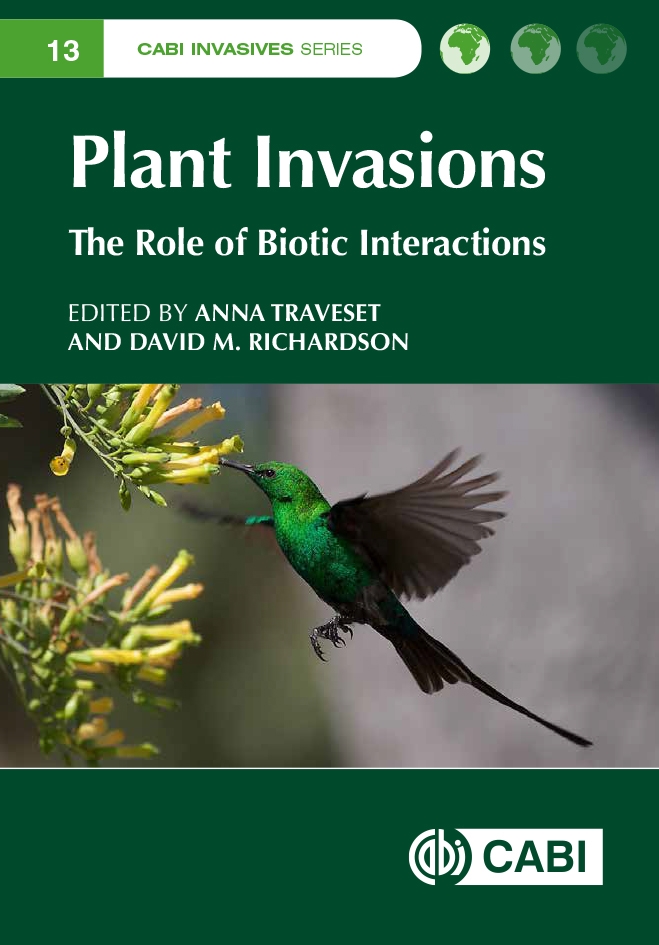
The role of self-pollination in plant invasion

Hawk moth (Agrius convolvuli)

Plants that can self-fertilise are more likely to become invasive than those that cannot and among invasive plants, those that can self-fertilise have invaded larger areas. While this is intuitive, it has not yet been shown that this is a causal relationship, as many introduced plants receive visits from pollinators in the novel range.

read article

Published book

Front cover of Alien & Invasive Animals: A South African Perspective

Alien & Invasive Animals: A South African Perspective

by Mike Picker and Charles Griffiths

While alien plants have been well publicised, this is the first book to be published on alien animals of Africa. It describes the history of each invasion, and the ecological and economic impacts in South Africa; and it discusses the effect of introduced biocontrol agents.

View a list of all C·I·B published books.

For Students

Photo: J. Shaw In support of our vision, we are offering bursaries to students who are studying towards an Honours, Masters or Doctoral degree in biodiversity, environmental sociology or invasion biology. Click on links to the left under “Student & Research support” to find out more about the support and bursaries that are on offer.

Events

News
21 May 2013

The process of biological invasion involves the movement of propagules, be they individuals, seeds or pollen, from one area to another area. The success and rate of introduced species establishment and reproduction in the new area rest, among other factors, on…

16 May 2013

The European Inland Fisheries and Aquaculture Advisory Commission (EIFAAC) and Inland Fisheries Ireland (IFI) recently hosted a conference for scientists, managers and policy makers across the European Union.

06 May 2013

A central goal of invasion biology is to prevent or reduce the impacts of invaders on the environment, economy and society. One highly effective way to reduce invasive species impacts in a country is to prevent the introduction of harmful species in the first place.

29 April 2013

Invasive plants compete with native plants for important resources like water and nutrients, often outcompeting or even causing local extinction of indigenous plants. Australian acacias are one such group of plants in South Africa…

Going to a sub-Antarctic Island or other isolated site?

Please see this video for quarantine guidelines.

Special offer - 20% off

View this advert for more details

Past C·I·B Events