Managing invasive species is one of the most taxing challenges facing conservation managers in many parts of the world. Because effective
management of invasions requires cognisance of so many interacting factors (ecology of different invasions species, disturbance regime, political and management
constraints, public opinion, etc), managers are often baffled by the complexity in their attempts to accommodate multiple linkages. The result is often that
management is ineffective. Under these circumstances, multi-criteria decision models appear to be an appropriate tool for combining social, economic and
environmental factors into a manageable number of factors to identify an optimal management strategy. These models are, however, not exempt from uncertainties
due to the use of inappropriate factors.
Issues such as the above form part of the emerging field of
conservation biogeography, which seeks to apply biogeographical
principles, theories, and analyses to problems concerning the conservation of biodiversity.
In a recent paper published in Diversity and Distributions, former C·I·B post-doctoral associate Dr Núria Roura-Pascual,
together C·I·B post-doc Rainer Krug and C·I·B core team members Dave Richardson and Cang Hui, conducted a spatially-explicit sensitivity
analysis (by applying three different approaches) to assess the spatial implications of changing the relative importance of factors included in a multi-criteria
decision model aimed at prioritizing areas for clearing invasive alien plants in South Africa’s Cape Floristic Region.
The study revealed that:
- Priority maps were most sensitive to the fire-related factors, suggesting that fire is both a crucial driver of invasion in fynbos and an overriding
determinant of management options. The sensitivity of the model to changes in other factors was more context-specific.
- The prioritization of areas for alien clearing is highly dependent on the particularities of the regions of study, and the development of general guidelines
across regions within the same bioregion is limited. Prioritization strategies need to be adjusted to the environmental conditions and status of invasions of
each region.
- The adoption of different prioritization approaches has considerable consequences at a spatial prioritization level, and managers need to be aware of their
decisions when setting priorities for alien control.
- Considering the potentialities of the approach for guiding conservation practices and the scope for further methodological improvements, we encourage research
to pursue this line and develop protocols for spatially-explicit sensitivity analysis applied to new management tools.
View the paper at www3.interscience.wiley.com/journal/123327878/abstract.
Also featured on the cover of Diversity and Distributions Volume 16(3).
Managing invasive species is one of the most taxing challenges facing conservation managers in many parts of the world. It is also one of the areas where
conservation biogeography can provide crucial insights to guide management. The paper mentioned here describes a protocol for spatially-explicit sensitivity
analysis of typical decisions facing mangers of invasive species in a complex environmental and socio-political setting. The protocol uses three different
approaches of sensitivity analysis to evaluate the effects of changing the relative importance of decisions on management actions. The study was undertaken
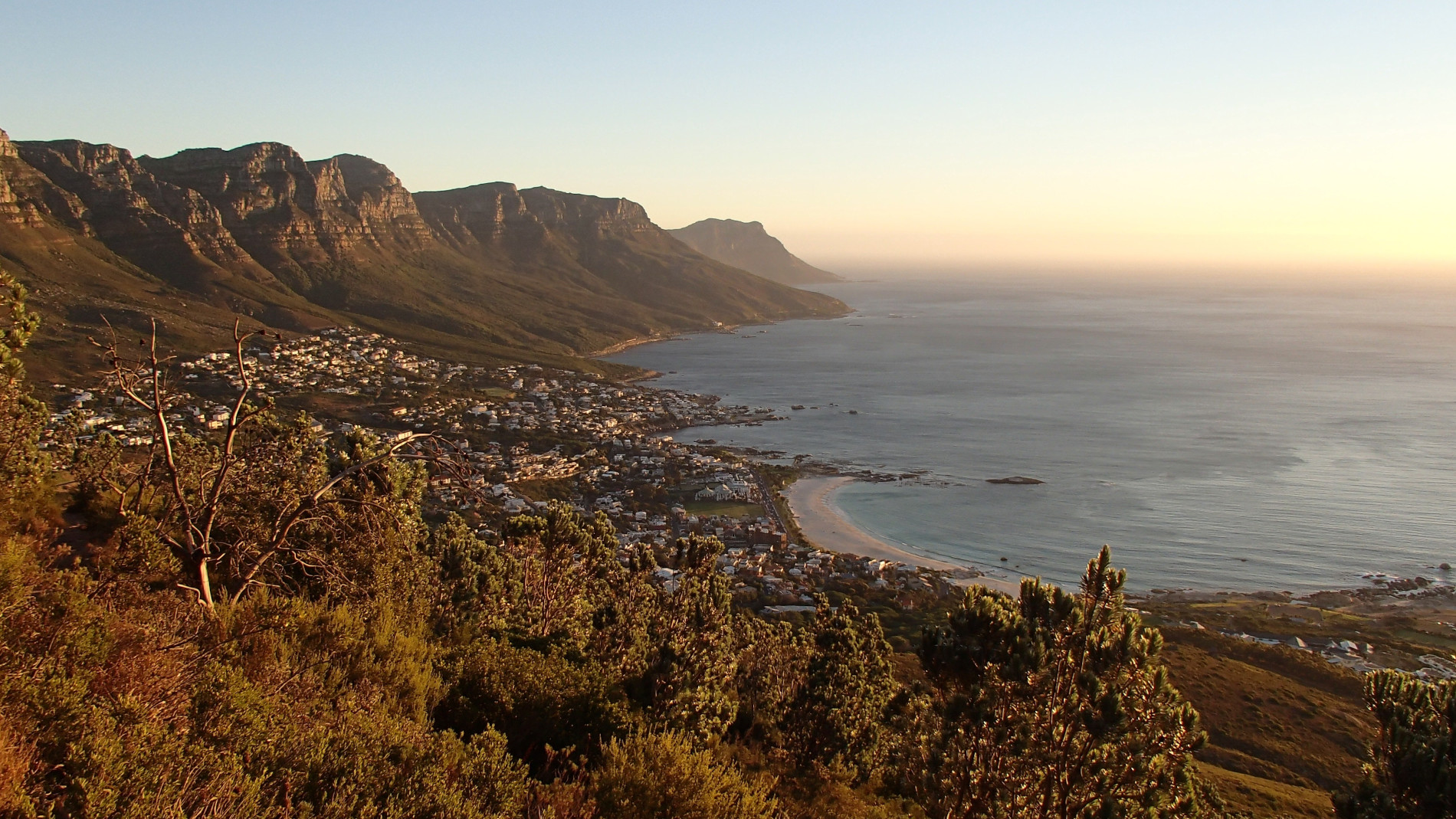
in three areas within South Africa’s Cape Floristic Region, including the Cape Peninsula. The cover image shows an aerial view of Cape of Good Hope section
of the Table Mountain National Park Point on the Cape Peninsula. Invasive alien plants (e.g., Pinus pinaster, shown at the top) are a major threat
to the region’s biodiversity (mass- flowering Watsonia borbonica as an example). Managing fire, which is also a crucial in the integrated control
of invasive plants, is another challenge. Maps show: priorities for managing invasive plants according to pre-defined strategies, with red tones corresponding
to high priorities (left); and distribution of woody invasive alien plants, with different colours depicting species (right).
Photos and design: D.M. Richardson (central image courtesy of the City of Cape Town).
Further reading: