Figure 1. Science at the C·I·B in a nutshell
Several themes that characterise the core of the C·I·B’s research programme are discussed below. Links are provided to web pages, reports and key publications that
showcase findings to date and provide further details of particular projects.
Long-term research
A. Long-term change in insect assemblages
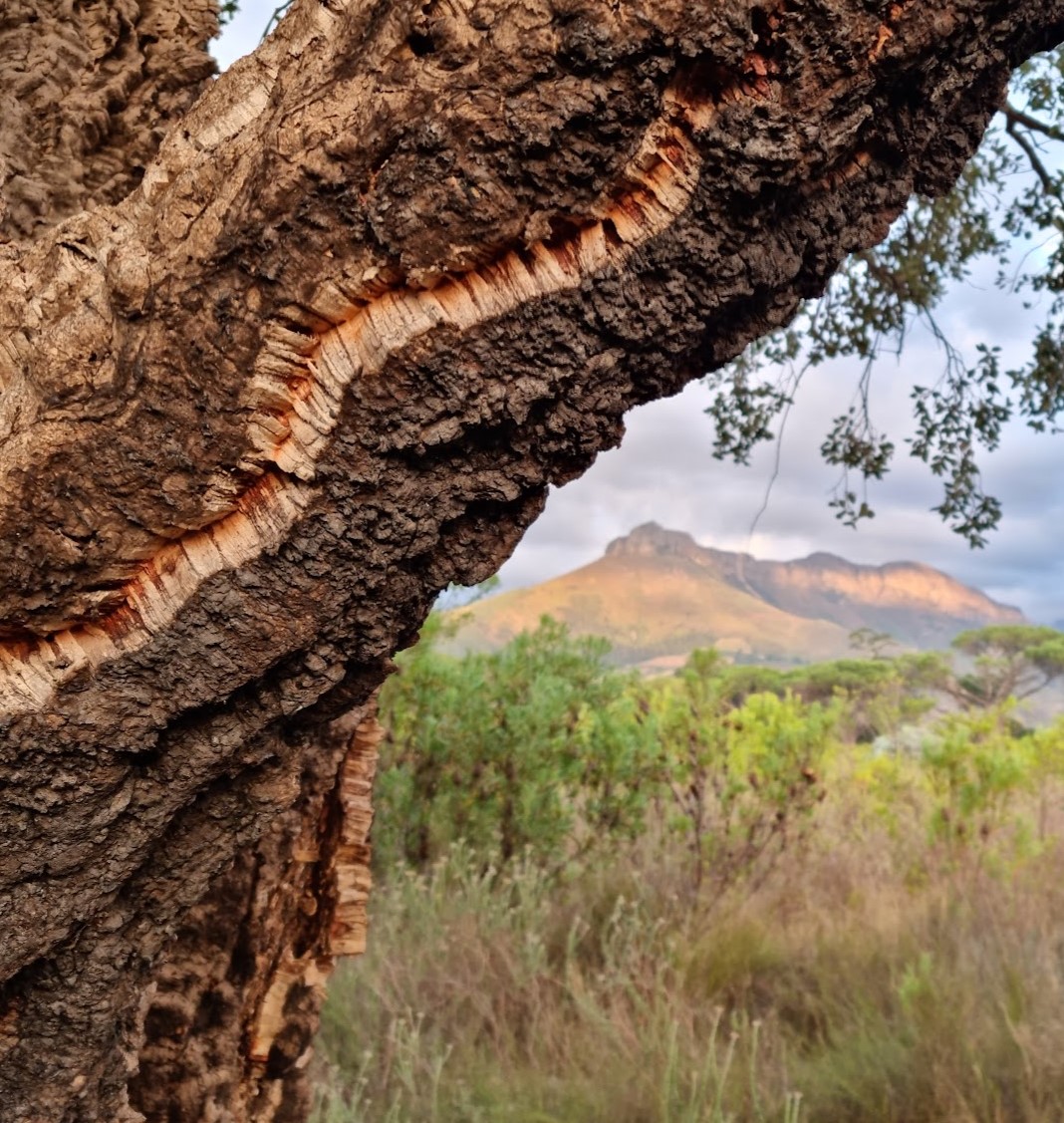
This work involves the investigation of invertebrate diversity along several major spatial transects in different areas of South Africa: the
Cederberg (Western Cape), Drakensberg (KwaZulu-Natal) and
Soutpansberg mountains (Limpopo). Results from this work
are also contributing to the Formicidae Barcode of Life project.
B. Long-term changes to the Prince Edward Islands ecosystem
The C·I·B has a strong research presence on the sub-Antarctic islands of the Southern Ocean. Long-term work on the Prince Edward Islands involves repeated
measurement of sites that were investigated many years ago, providing multiple data points in a lengthy time series. The research includes elevational surveys of indigenous
and alien plants, and effects of environmental change, including interactive effects of climate change and predation by introduced house mice. Past and current research
projects on the islands are summarized in the popular book “Marion and Prince Edward: Africa’s Southern Islands”.
Short-term collaborative research
A. Biodiversity foundations
Biological invasions and the consequences of human activities are not clearly separable from other natural processes, but rather form a clearly identifiable component
thereof. Consequently, the impacts of biological invasions on biodiversity cannot be comprehended without a sound understanding of the patterns in and mechanisms structuring
biodiversity. The development of comprehensive understanding and predictive capability of biological invasions requires information from a wide variety of fields. For a flavour
of recent and ongoing research on “biodiversity foundations” at the C·I·B click here.
B. Biodiversity dynamics through space and time
Spatial and temporal processes drive biological invasions by influencing how populations establish and then move over time and space. Thus, investigations of biological
invasions are an extension of the concerns that ecology has long had with the determinants of species abundance and distribution. Some prominent themes from recent and ongoing
research at the C·I·B are discussed further here.
C. Molecular ecology and genetics of invasions
To address the biodiversity consequences of biological invasions from an evolutionary point if view, the C·I·B has embarked on a range of studies incorporating
molecular ecology. This research field entails using population genetics, phylogeographic and phylogenetic approaches to explore ecological processes. Major topics of this research
are discussed here.
D. Global environmental change, biological invasions, ecosystem services and sustainability
The Millennium Ecosystem Assessment (MA) identified five major drivers of biodiversity loss: habitat alteration, climate change, invasive species, overexploitation and pollution.
Understanding how these drivers have led to biodiversity loss, how they are likely to continue doing so both in isolation and through synergistic interactions, and what actions need
to be taken to mitigate and adapt to their effects, are thought to be among the most significant questions facing humanity. Thus, these topics are key features of the research
undertaken by the C·I·B. Some recent and ongoing facets of work in this area are set out here.
E. Detection, deterioration, restoration and re-introduction
Once alien species have established and become invasive, their costs to biodiversity, ecosystem functioning and society are typically high. These costs may be either in the form
of direct impacts, or partly as a result of control interventions. In consequence, ensuring early detection of potentially invasive species, and developing cost-effective and efficient
strategies for documenting and controlling changes in species abundances and distributions are key elements of reducing the rates of biological invasions. Some research activities in
these themes are discussed here.
F. Risk assessment, indicators and policy
From the perspective of biodiversity conservation, the introduction and subsequent establishment of alien species represent a potential risk. However, non-indigenous species are
also of considerable value to national economies. Ensuring the right balance between individual gain and public good requires informed risk assessments prior to the introduction of
non-indigenous species and prior to the translocation of species already present in a given region. Details of research on this theme appear here.
G. Invasion, science, and society
Biological invasions have large impacts on society, either directly, by affecting ecosystem services, or indirectly by interacting with other environmental change drivers to affect
ecosystem service delivery. However, society may also accrue positive benefits from biological invasions, either as a consequence of job creation through their removal, direct use of the
invasive species, or more indirectly through the environments non-indigenous species create. The C·I·B investigates the social dimensions of environmental change and in
particular of biological invasions and their remediation. The main research topics in this regard are discussed here.
H. Research for the Integrated Management of Invasive Alien Species in collaboration with the Working for Water Programme (Natural Resources Management Programmes)
Using various approaches such molecular genetics, impact and risk assessments, and the collection of spatial and distributional data for a wide range of invasive species, this project
aims to provide information to facilitate improved management of some of the worst invasive species in South African ecosystems. The project has had a strong focus on aspects of the invasion
ecology of Australian wattles. This group (1,020 species in the subgenus Phyllodineae of Acacia native to Australia) provides a superb model system for exploring all aspects
of invasion science for one of the world’s most important invasive plant taxa. An international workshop on the theme “Human-mediated introductions of Australian Acacia species—a global
experiment in biogeography” was held in Stellenbosch in November 2011 and a special issue of the journal Diversity and Distributions was published in September 2011. Detailed
studies are underway on the molecular ecology of Acacia pycnantha and A. saligna.
I. Invasion Biology in Support of Environmental Sustainability during Times of Change
The bulk of work on this theme is being conducted as part of
Stellenbosch University’s HOPE Project.
Overarching goals of the work are to undertake cutting-edge research in biology and to develop the policy implications and social dimensions of this work, with biological
invasions forming the core around which the research revolves. To reach these goals, several projects have started and fit in two main strategies:
- Environmental change effects on species of direct concern to humans: tsetse flies and climate change,
climate change and the South African vectors of malaria, and climate change effects on the biocontrol agent of the invasive aquatic plant Salvinia molesta.
- Habitat alteration and climate change effects on biodiversity